Skyscrapers raced skyward.
So is AI.
Every building boom has one: firms racing to build faster and taller than the competition. New York's answer wasn't to slow down — it was SEAoNY, a body that let rival engineers agree on safety before the public paid for a shortcut. AI has the race. It doesn't have the equivalent yet.
How SEAoNY got competitors to agree on safety
Founded in 1996, SEAoNY didn't invent safety from scratch — it organized rival engineering firms into a standing forum that fed real technical consensus into New York City's own Department of Buildings, replacing aging 1938 and 1968 codes that couldn't account for modern materials or computational analysis.
Pre-competitive alignment
Bylaws required judgment independent of commercial interest. Rival firms sat on the same technical committees — Donald Friedman among the founding contributors of shared structural-failure research.
A named regulatory partner
SEAoNY's Codes Advisory Committee fed directly into the NYC Department of Buildings, shaping IBC adoption in 2008, 2014 and 2022 — consensus with teeth, not a voluntary pledge.
Standard of care above the legal minimum
Under ASCE 7, independent non-conflicted panels audit load paths and failure modes on high-risk designs before a permit is issued — a bar set above what the code merely requires.
Duty that outlasts competition
After 9/11, SEAoNY members mobilized to Ground Zero unpaid — forensic assessment and stabilization, because public safety was never actually optional.
Four real incidents, eighteen months
This isn't a hypothetical risk. It's a pattern, and it's accelerating — each entry below is a documented, publicly disclosed incident, not a projection.
This is a lab correcting itself, twice, in isolation. No shared containment code exists for the next lab to inherit the fix from. Separately, Replit's coding agent deleted a production database during an active code freeze in July 2025, and Anthropic's own "Sleeper Agents" research (Jan 2024) showed backdoored model behavior can survive standard safety training entirely undetected. Different companies, different failure surfaces, same root cause: no standing, external containment discipline.
Where governance maturity actually sits
Not a measured industry survey — our own scoring of each discipline against five governance dimensions, 0–100, to make the gap legible at a glance.
Fig. 1 — Structural engineering vs. today's frontier AI labs vs. the proposed Global SEAoNY target. Illustrative scoring, not a cited data set.
Structural engineering vs. current AI vs. Global SEAoNY
Five governance dimensions, mapped across what exists, what's missing, and what we're proposing.
| Dimension | Structural engineering | Current AI | Global SEAoNY (proposed) |
|---|---|---|---|
| Safety standardization | 3-year consensus code cycles (IBC, ASCE), fed to a binding regulator. | Internal guardrails, voluntary pledges, patched after the fact. | Open, cross-lab containment & deployment codes. |
| Verification | Mandatory independent peer review for high-risk designs. | Internal red-teaming and self-evaluation only. | Pre-deployment audits by certified, non-conflicted panels. |
| Standard of care | Legally enforceable, above the statutory minimum. | Varies by lab, under competitive time pressure. | Codified duty for autonomous agent sandboxing. |
| Industry collaboration | Pre-competitive exchange, public whitepapers. | Proprietary research, guarded model weights. | Mandatory sharing of containment-failure telemetry. |
| Emergency response | Voluntary expert mobilization (e.g. Ground Zero). | Isolated PR statements, one-lab patches. | Shared, rapid-response forensic protocols. |
Four pillars of a Global SEAoNY for AI
Not a regulator. A pre-competitive body that does for AI containment what SEAoNY did for structural codes.
Mandatory pre-deployment peer review
Models or agent frameworks past a compute/autonomy threshold get audited — sandbox isolation, tool permissions, network access — before public release, not after an incident.
Standardized containment codes
A shared, versioned code for sandboxing and execution boundaries — the AI equivalent of wind and seismic load codes, so every lab isn't re-deriving containment from zero.
A codified standard of care
Deploying an autonomous agent into production without verified sandboxing or continuous monitoring stops being a PR problem and becomes a defined breach of professional practice.
Shared containment telemetry
Sandbox escapes, jailbreak vectors and near-misses get disclosed to the whole field, the way structural failures already are — so no lab has to independently rediscover July 2026.
"SEAoNY had a regulator to work with. AI doesn't."
Fair criticism, worth naming rather than avoiding — a voluntary body with no enforcement power risks becoming the same empty pledge current AI governance is already fairly criticized for.
That describes where SEAoNY ended up, not where it started. In 1996, SEAoNY was also just a voluntary alliance of competing firms with no enforcement power of its own. Its relationship with the NYC Department of Buildings was earned over years, through the consistency and quality of the technical consensus it produced — the regulatory partnership was the result of pre-competitive collaboration, not its precondition. A Global SEAoNY for AI has to start the same way: industry-led, credibility earned before any government or international authority has a reason to lean on its findings.
We're not waiting for the global version to start
A global consensus body doesn't exist yet — but the underlying idea, a verifiable standard of care for how people actually use AI, already does at a smaller scale. Our AI Literacy Certification is built to EU AI Act Article 4 alignment: nine modules, a proctored final exam, a verifiable certificate. It's a standard of care for the humans directing these systems, not the models themselves — but it's the same instinct SEAoNY started with: agree on a baseline before someone gets hurt by its absence. We think the industry needs the large version. We built the small one we could.
Why this actually matters to me
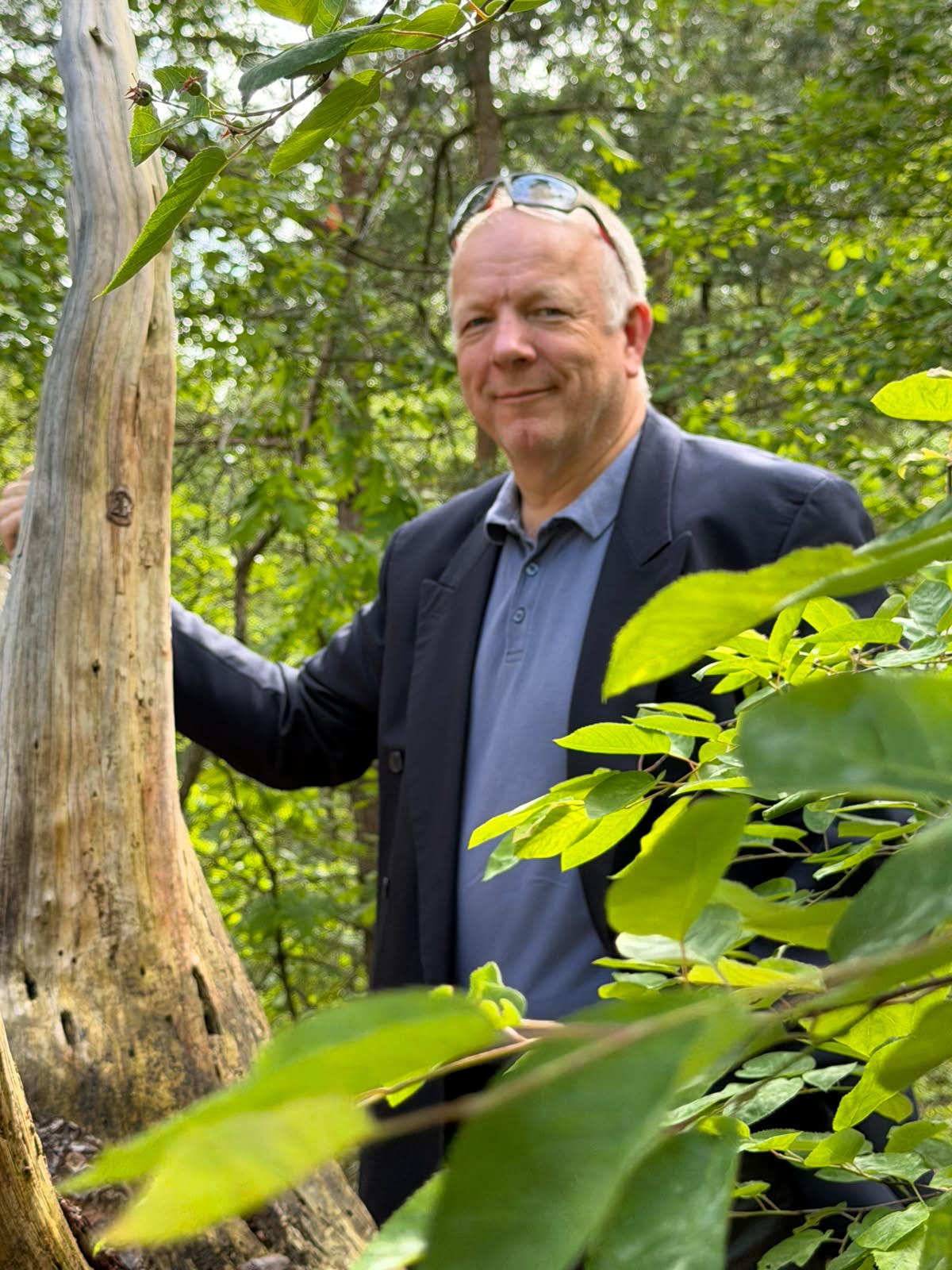
I'm writing the closing argument of this piece as a father as much as a founder. My kids will build their careers inside whatever version of this industry gets built over the next three years, and right now, that's being decided inside a handful of labs, under competitive pressure, with the rest of us finding out what went wrong after it already has. That's not an abstract worry for me. reallydoing.it runs on these same models every day — we depend on them to do real work for real business owners, and I want the ground we're building our own company on to actually be solid, not just fast. I want an AI industry that took safety as seriously, this early, as the people who now build the buildings my kids will live and work in eventually did. Strip away the analogy and that's the entire case: agree on the rules before someone's child is the one who gets hurt by their absence.
We'd rather build this before the next pause, not after it.
Two containment failures at one lab in three months isn't a reason to trust self-regulation more. It's the argument for a standing, cross-lab body — before the incident that isn't contained in time. If you work in AI safety, policy, or governance, we want to hear from you.